Children's National
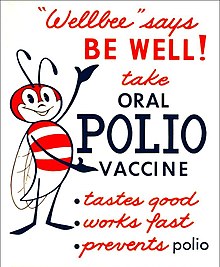
So let's look at the consequences of the Syrian conflict (again!). Here's the story....
The war in Syria and the refugee crisis in its neighboring countries, has changed the infectious disease dynamics of the country. The WHO has now declared 17 confirmed cases of Polio in Syria, most in children under 2 years old, born after the war started, and vaccination rates dropped from 90% to 60%. Syria had eliminated Polio in 1999. Though the polio virus had been found in Israeli, Egyptian and Iraqi waters. As refugees and fighters are crossing the borders around Syria, including the million heading into Lebanon, Polio is going to follow these men and women, infecting the unvaccinated children.
As a reminder: what is Polio?
This website gives a quick overview and answers some questions you may have. You most probably recall that Polio is a virus living in water and sewage (poop), and is spread between people. It causes irreversible paralysis, and can lead to death from respiratory muscle paralysis and failure. There is no treatment for Polio. And for every active case identified, there are more than 200-1000 asymptomatic carriers!
And if you thought that not traveling to Lebanon, this may not affect you. Dr Eichner and Brockmann published the following controversial article in the Lancet this month, claiming that the EU is at risk and offering recommendations. Could the US be at risk too?
What should be done?
Many NGOs, the UN and the WHO are working on mass vaccination campaigns with OPV. In the US we use IPV, which is great for individual protection, but does not help prevent spread of the virus through the GI system and hence help with decrease in the population spread, such as the OPV. However, accessing the most vulnerable groups and refugees in Syria is proving very difficult.
Finally, here are the CDC guidelines on vaccinations for travelers the region:
Syria
Israel and Lebanon


No comments:
Post a Comment
What's your opinion?